Sunday, December 1, 2019

Peter Parley's Christmas

Or, a festive story of Transatlantic literary piracy starring nineteenth century children's favourite Peter Parley.
Tales About Christmas by Peter Parley (London, 1838) and Peter Parley's Christmas Tales (1838) - spot the difference

Thursday, November 6, 2014

Anna Katharine Green's The Leavenworth Case (1878)

First edition, 1878
This Friday I'm co-hosting (along with my colleague Hilary Emmett) the second reading group of the British Association of Nineteenth Century Americanists. The text that we've chosen for the event is Anna Katharine Green's The Leavenworth Case (1878), so I've been spending plenty of time recently thinking about this book and Green's life and career more generally. I'm looking forward to hearing what other people thought about it and her (a little trepidatiously, almost!), and I don't want to jump the gun on what evolves in that discussion, but here are a few thoughts in advance of Friday (no spoilers, if you're still reading).

Friday, October 31, 2014

Happy Halloween: "Sagt der Fogel, 'Nimmermehr!'"

H. A. Kimball (Concord, NH), c.1865-1875, via NYPL
No time, alas, for a proper Countdown to Halloween this year - but this deserved to be shared.

Friday, May 30, 2014

Going West

Twain, Harte, Stoddard, Coolbirth - Ben Tarnoff's The Bohemians (Penguin, 2014)
Excuse the absence - I've been on a long voyage to the West and points thereabouts. With some inevitably, I finally ended up in San Francisco in the 1860s and 1870s, and got stuck there for a while. I've been working on what will be one of the first chapters of my book about Mark Twain and the Mississippi, which means I've finally been getting to grips with his time in California and the rich literary world of which he was a part. At the same time, I've also been chasing the ghost of Ralph Keeler - remember him? - which meant uncovering his early career in the Alta California and other San Francisco publications. And then, with some uncanny timing, I got asked to do some filming about the Gold Rush, which left me westering for a little while longer. How lucky, then, that these occidental travels coincided with the publication of Ben Tarnoff's The Bohemians (Penguin, 2014), one of the most engaging and readable books ever written on this pivotal and underexamined moment in literary and cultural history.

Thursday, December 5, 2013

"A right fat, jolly, roistering little fellow" - Irving, Paulding, Saint Nicholas

It's Saint Nicholas' Eve, which means that in Holland - and in plenty of other places, too - Sinterklaas celebrations are in full swing. I'm paying brief homage to the Dutch part of my heritage by gesturing to the development of Saint Nicholas in the New World in works by early American writers - specifically Washington Irving and James Kirke Paulding. Yes, little Saint Nick was a popular chap amongst the Knickerbocker set.

Tuesday, November 5, 2013

Mr. Pooter Remembers the Fifth of November

To mark the day, Mr. Pooter's account of a firework party:


From, of course, George and Weedon Grossmith's Diary of a Nobody, first published in Punch magazine, 1888-1889. Here's the original appearance of the entry above - from November 24, 1888. And because there's nothing, but nothing, more Pooterish than blogging, a couple of thoughts...

Thursday, October 31, 2013

Countdown To Halloween: "A Hallowe'en Party" (1896)

"Pumpkin Carving", Benjamin Franklin Reinhart, 1872  (via)
It's Halloween! Which means we've come to the end of the Countdown for another year. There's still time to take in the glory of Benjamin Franklin Reinhart's pumpkin carvers, above, another illustration that comes courtesy of the American Antiquarian Society. It also means it's time for a party - Caroline Ticknor's "A Hallowe'en Party" (1896), to be precise.

Tuesday, October 29, 2013

Countdown to Halloween: War Wounds


Today, a Halloween story from Godey's Lady's Book and Magazine in 1870, in which the emerging holiday touches upon the trauma of the Civil War and the project of reunion.

Friday, October 25, 2013

Countdown to Halloween: Pumpkins Redux

"Pumpkin Time", H. Harring after Benjamin Champney for L. Prang & Co., 1872, via
It's about time we saw some pumpkins on this Countdown - so make sure you click the image above to get a good look at a chromolithograph of Benjamin Champney's "Pumpkin Time", from 1872, courtesy of the American Antiquarian Society. There's also a nice blog post on this image, here. But that's not the only pumpkin delight on offer today.

Thursday, October 17, 2013

Countdown to Halloween: Walter Scott, "Tam Lin", and "Thomas the Rhymer"; or, Scary Fairies

"The Young Tamlane"
Fairies and old ballads - for various reasons, none of which we need to go into right now, I've been thinking a lot about both over the last little while. So today's post features two old - very old - ballads that feature fairy folk - one which reaches its climax, no less, on Halloween. And, what's more, it's Walter Scott who'll serve as our guide to these supernatural misadventures.

Tuesday, October 8, 2013

Countdown to Halloween: The Sleepy Hollow Variations

Norman Rockwell's "Ichabod Crane"
It's not often that this blog syncs so neatly with contemporary popular culture (obviously, anyway). But on Wednesday October 9th, Sleepy Hollow, a new ongoing series based (oh so loosely) on Washington Irving's 1820 story "The Legend of Sleepy Hollow", premieres on Universal UK. It looks delightfully gonzo: the character of Ichabod Crane (now a Revolutionary War hero, it seems) wakes up in the twenty-first century (Rip Van Winkle style - see what they did there?) to battle the headless horseman. Great television premise or the greatest television premise? I can't wait. It seems like an intriguing off-shoot of the contemporary vogue for revisiting nineteenth century moments - Hell on Wheels and Copper on the small screen, Django, Lincoln, The Lone Ranger on the big, off the top of my head. I'm sure there are more. What goes around comes around, of course - but why now, I wonder?

Regardless, this seemed like a good enough prompt to finally rope "The Legend of Sleepy Hollow" into this Halloween countdown, and think a little bit about its persistence in American culture - like Norman Rockwell's great depiction of Ichabod, left. If you've never read it, here it is in an 1821 John Murray edition.

Sunday, October 6, 2013

Countdown to Halloween: "The Lemur, A Halloween Divertimento" (1822)


Blackwood's Magazine was the unrivalled home of Gothic terror in the early nineteenth century, which makes it rich pickings for those looking for antiquarian thrills at this time of year. Today, however, I'm highlighting a bona fide Halloween treat from Blackwood's, in name as well as substance - "The Lemur, A Halloween Divertimento", published in both the November and December issues in 1822.

Thursday, October 3, 2013

Countdown to Halloween: "The Forest Fairies' Fount" (1829)

And so it begins - with a lost gem, an early American Halloween poem from 1829 that not only connects us back to the beginning of last year's Countdown but also comes with its own sad story.

Tuesday, October 1, 2013

Countdown to Halloween 2013

"Autumn Leaves", John Everett Millais, 1856 (via)
The leaves are turning, the nights are drawing in - so it's time for a little antiquarian spookiness. Yes, the American Scrapbook Countdown to Halloween 2013 starts here. Last year, I had a lot of fun and learned much more than I expected. Please do revisit those posts, all available here, and make sure to catch the post that I put together for the I. B. Tauris blog summing up the experience. Who knows what this October will bring? (Apart from fewer posts, of course - that's pretty much guaranteed.) Make sure to check out some of the other blogs taking part - almost 200 of them, and counting. Stay tuned.


Friday, September 27, 2013

E.D.E.N. Southworth in London

E.D.E.N. Southworth has been claiming my attention this summer. I revisited The Hidden Hand and, unexpectedly, was very happy to be able to use it for a chapter I was writing on highwayman Joseph Thompson Hare that should see the light of day at some point in 2014. Then, apropos of not very much except the need to scratch an itch, I got hold of a copy of E.D.E.N. Southworth: Recovering a Nineteenth-Century Popular Novelist (University of Tennessee Press), a great collection of essays edited by Melissa Homestead and Pamela Washington. What it revealed, amongst many other things, was how little I really knew about Southworth's extraordinary career, and how much of her work stills awaits recovery. Inspiring, and highly recommended.

During the course of these meanderings, I came across one particular surprise that I couldn't ignore: Southworth lived in London from 1859 to 1862. I knew that Southworth had been popular on this side of the Atlantic, of course, but I didn't know that she'd actually been a resident.

Tuesday, June 18, 2013

George Catlin's American Indian Portraits at the National Portrait Gallery

No lie - you've got until June 23rd
Last time, I was engaging in a little cultural time-travel with my Walter Scott field-trip - attempting to resurrect, on an individual level at least, an association between a place and a book that had faded away long ago. Yesterday, now I sit and think about it, I was engaged in a similar process of time-slippage when I finally made it, just in time, to the National Portrait Gallery's pretty wonderful George Catlin exhibition.

Friday, May 24, 2013

Field trip: On location with Walter Scott's Fortunes of Nigel (1822)

("Camlet Moat", Fortunes of Nigel, via Illustrating Scott
This one has been a long time in the works: the discovery that part of Walter Scott's The Fortunes of Nigel (a winning title if ever there was one) took place in a location ten minutes down the road from where I live was one of the things that inspired me to finally start reading his work - and to go on an American Scrapbook field trip.

Tuesday, May 14, 2013

Our Library Table: Debby Applegate's The Most Famous Man in America: The Biography of Henry Ward Beecher
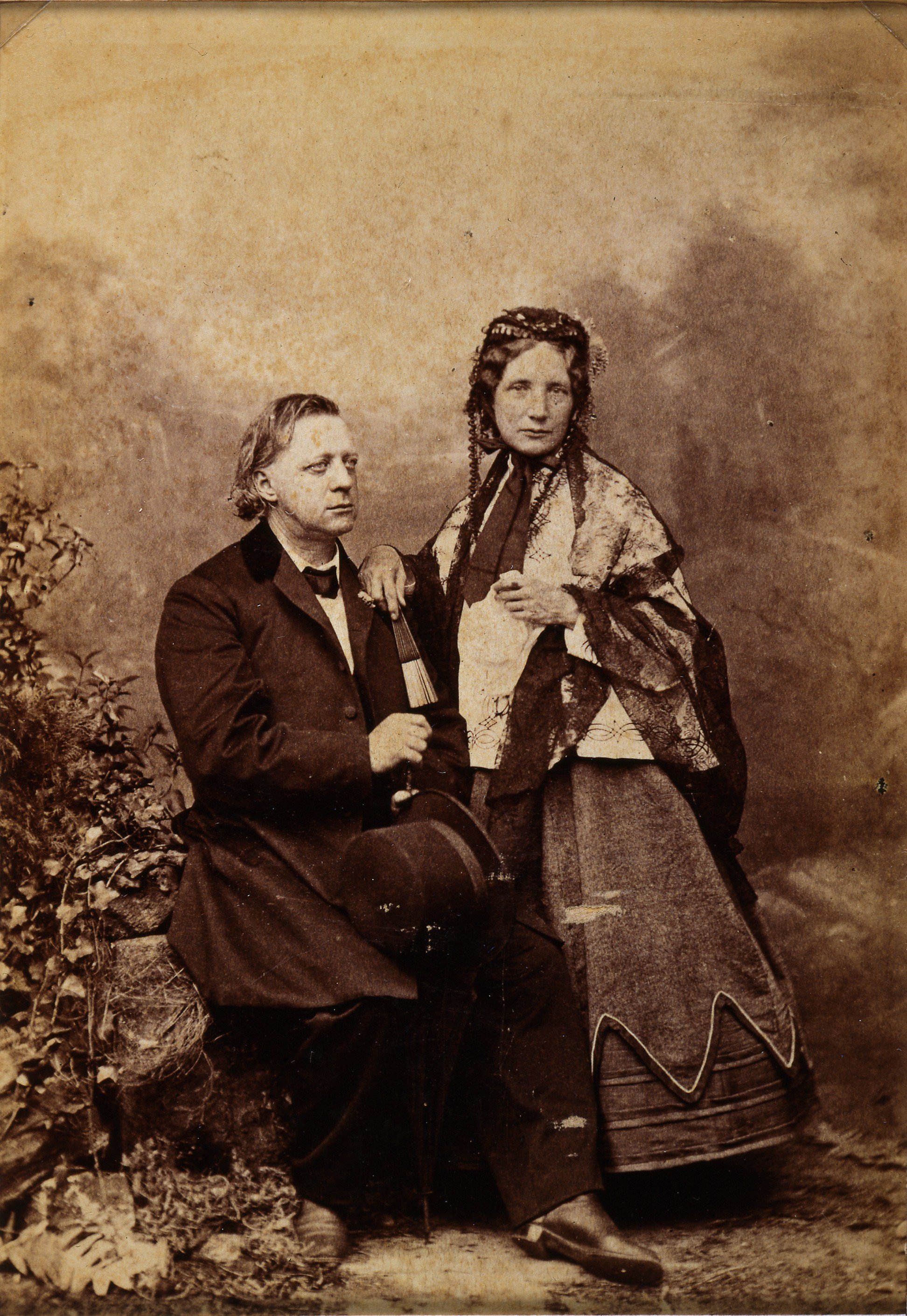
Henry and Harriet
I've been reading Debby Applegate's The Most Famous Man in America: The Biography of Henry Ward Beecher in stolen moments (so, slowly). It's a compelling read, all told, and totally illuminating at points. I knew a little bit about Beecher (the adultery bit, mainly, thanks to Twain's satellite relationship to the Beechers in Hartford) and had an inkling that I wanted to know more. This proved to be a great place to start, pointing the way to a number of paths that I'll be following in the months to come.

Saturday, March 23, 2013

The Dime Novel Debate, Again

George Cary Eggleston
After my last post on the debates about the place of the Dime Novel in American culture in the 1880s, Demian Katz got in touch to tell me about the digitization efforts underway at Villanova University - available here - plus the online collections available at Bowling Green and Stanford. Exciting stuff! I'll be checking them out presently.

That also provides a good enough excuse to share a follow-up post on the Dime Novel debate - though in this instance, it was a debate that took place behind closed doors. In George Cary Eggleston's memoir, Recollections of a Varied Life (1910), he shares a moment of literary gossip that brings some interesting voices to bear on this apparently pressing point of controversy in the 1880s.

Wednesday, March 6, 2013

"Poor little Nellie Grant" and the Wedding of the Century

Nellie Grant, Algernon Sartoris (via)
Last year I took part in some filming for an episode of Heir Hunters, the BBC's genealogy / fortune-hunting reality-documentary show. Rather delightfully, the trail in this particular case led back to Nellie Grant, daughter of President Ulysses S. Grant, who married English rotter Algernon Sartoris at the White House in 1874 - and that's what I was brought in to talk about. The episode aired today and should be available here. It tells this remarkable story very nicely. But I thought it would also be interesting to share some of the primary source material that I uncovered during the course of my research for the episode - of which there's no shortage. This relationship made a large impact in Gilded Age America, and left an equally large footprint. While it's probably pretty banal to point out how contemporary the story feels, I still find it remarkable how much detail about this Transatlantic wedding - and the unhappy marriage that resulted - can be traced in the popular press, in the correspondence of the great and the good, and even in the literary history of the period. Celebrity wedding of the nineteenth century? I think it has a good claim to that title. What follows are a few highlights.